Archives

The Txoriak art installation by Irantzu Lekue is made up of 6000 birds

The artistic installation of the contemporary basque artist Irantzu Lekue is ephemeral and closes on Sunday “with the liberation of the birds”.

 Kaldearte was inspired by the songs “Txoria txori” by Mikel Laboa and “La Paloma” by Sebastián Iradier.  I wanted to establish a dialogue between the works and join art and citizen participation.

GASTEIZ The Basque artist Irantzu Lekue is developing the artistic installation Txoriak in Los Arquillos, Vitoria – Gasteiz, “an historic area full of ideal symbolism representing the concept of freedom. A utopia n centre of the capital of Alava,” she explains. A total of 6000 birds make up the artwork. “I made the artistic installations based on the repetition of simple, ordinary objects and gave them a new meaning through repetition,” she explained. On this occasion the materials used were cardboard, and fibreglass and the challenge was to elevate the piece, raise it in compliance with the safety regulations. So far I had done works with 7,000 or 10,000 objects, as in the closure of the Cultural Capital DSS2016 but there were never objects in the air and that was  the main challenge and I had the help of Jose Luis Landa who was responsible for  engineering the piece of art ”,she explained.

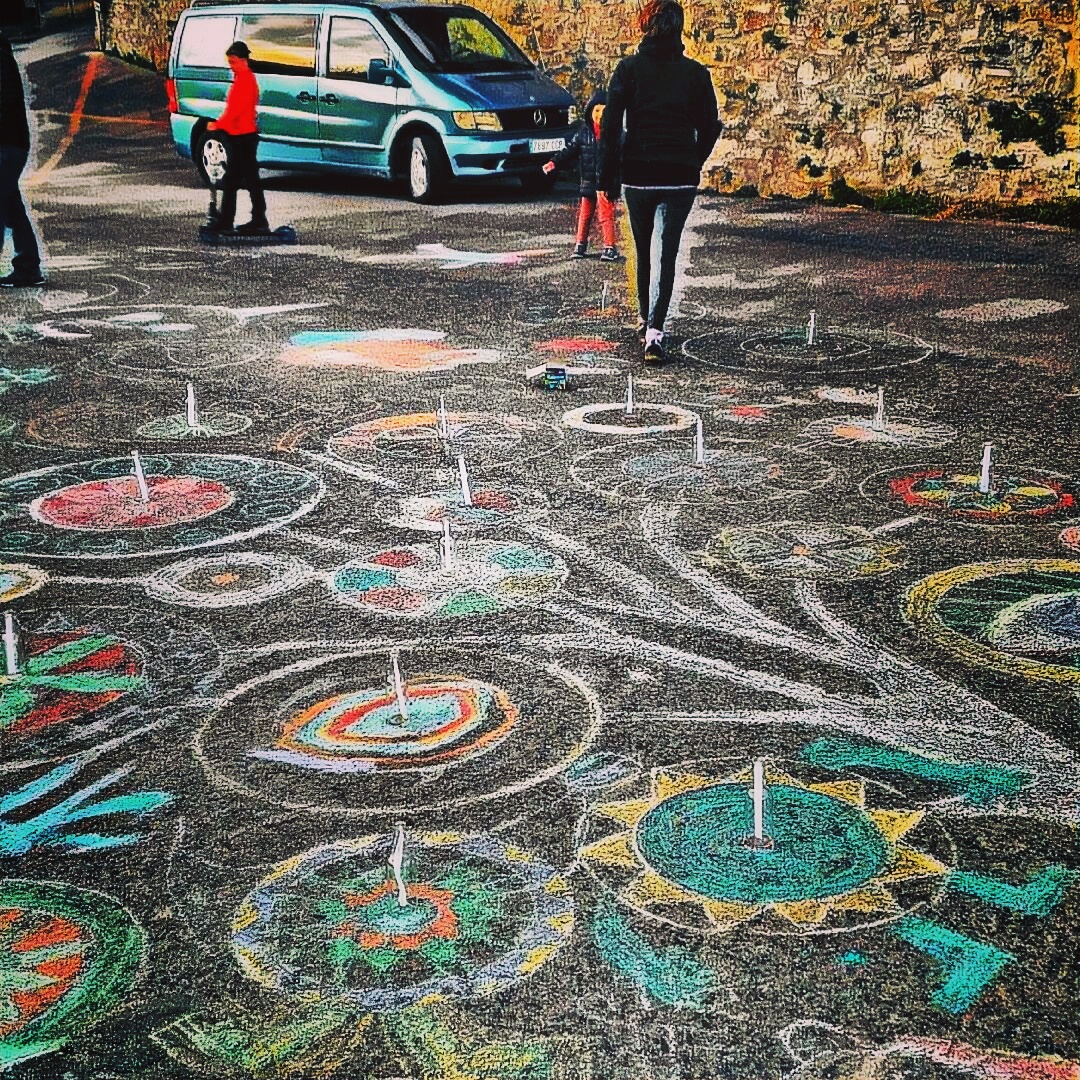
Txoriak stems from the concept of freedom, from the possibility of ascending, achieving objectives, flying, overcoming and transforming through ideas, art, imagination and creation. The artistic installation consists of thousands of birds, which, together in flocks, take flight in Los Arquillos, Vitoria Gasteiz, soaring soaring to join the color of the adjacent streets. The same but different, “each of the birds that invade KaldeArte fill this historic area of the city with joy and dynamism,” she said.

In the participatory process different centres and ikastolas of the city took part. Ikastolas; Armentia, Olabode, Mendebaldea, Samaniego, Koldo Mitxelena, the Temporary Education Unit or services and associations such as IRSE Araba, Abegia or the Sidálava Anti-AIDS Commission collaborated in the participatory process of the painting. “We have been working on this project for months and we are happy with its crystallization,” she explained.

It is an artwork in progress, a processual and ephemeral art installation that will disappear on Sunday and is inspired by two great authors:  Mikel Laboa, creator of Txoria Txori, and  Sebastian Iradier, creator of La Paloma, one  of the most versioned songs in the world. The work was also developed in the birthplace of Iradier, who lived in Los Arquillos. The central event will be held tomorrow Saturday at 22:00 and the dancer Yanela Murua will participate with a show created specifically for Kaldearte and Txoriak.

Irantzu Lekue is a contemporary artist and muralist from Vitoria-Gasteiz. She works for social transformation from art through cultural innovation, conceptual art and accessible art. Citizen participation is key in her artistic installations, although video art, painting and sculpture also work.

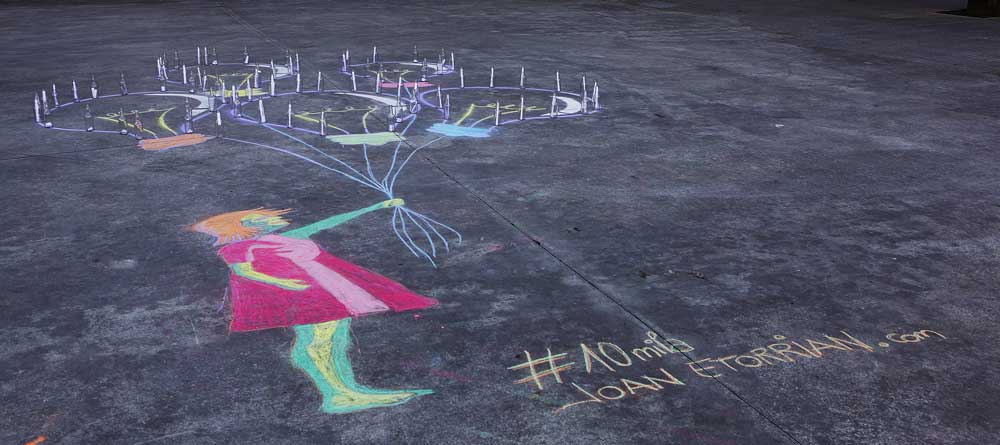
#10mila Joan Etorrian Aztarnak/ Huellas

AZTARNAK / HUELLAS

#10 mila JOAN ETORRIAN

#10mila Joan Etorrian Aztarnak / Huellas

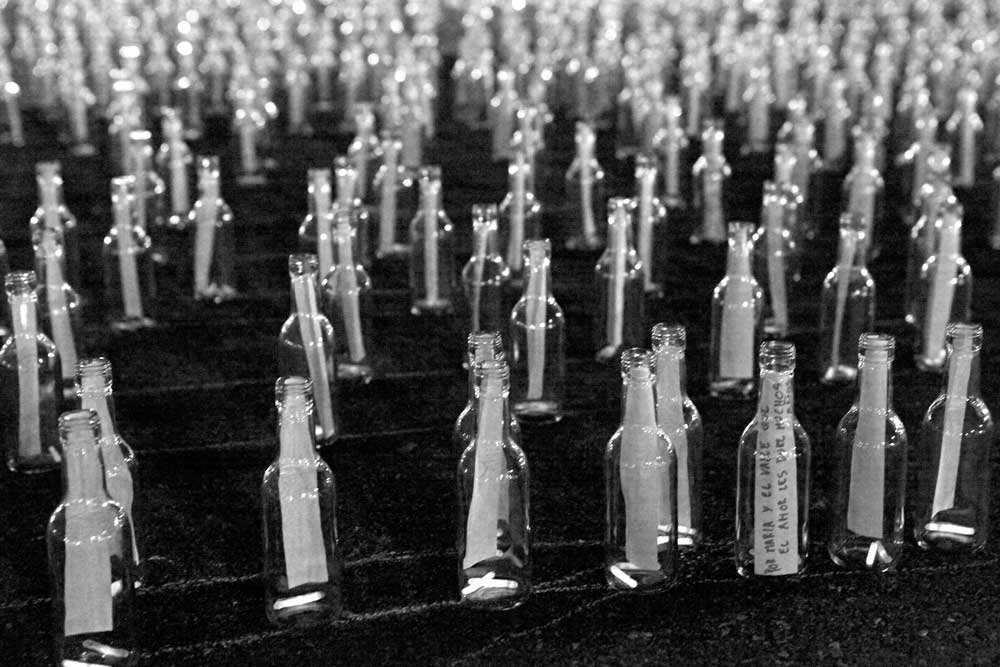
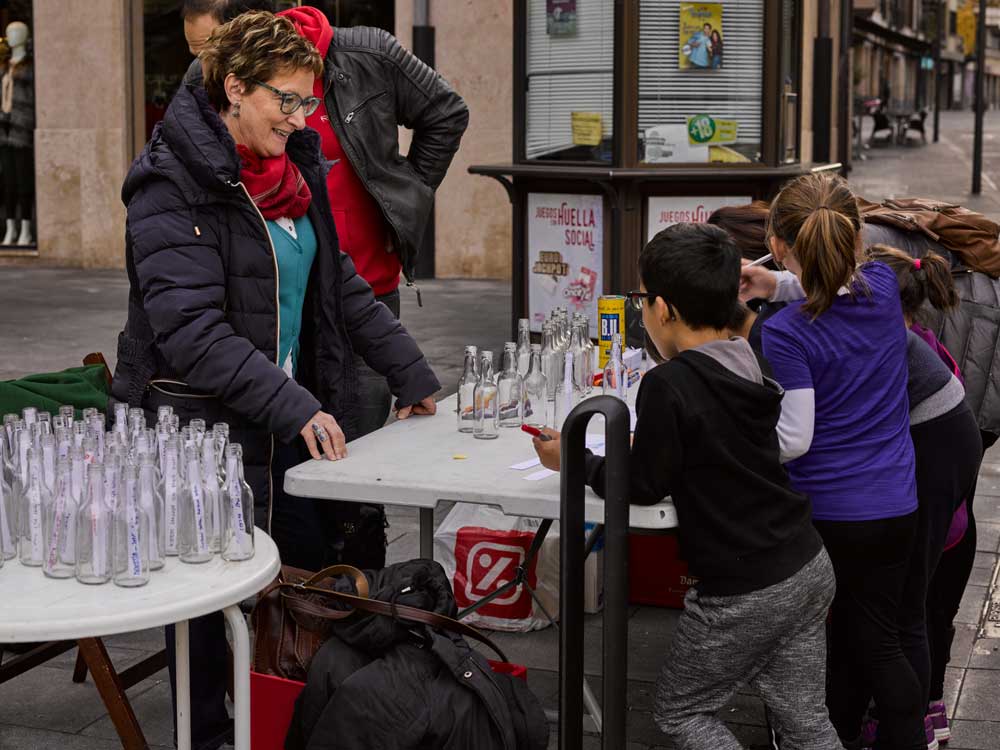
Do you remember the metaphor of the message in a bottle and thrown into the sea?


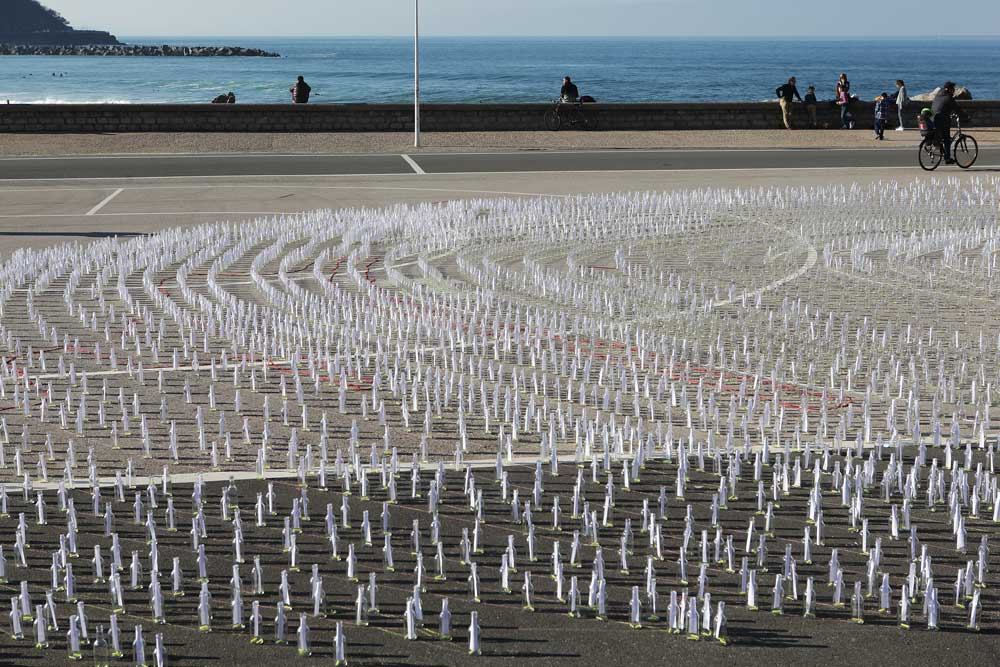
The artistic installation, “# 10000 Joan-Etorrian”, unites art, reflection and desires. DSS2016 is coming to an end and that is why this installation by the artist Irantzu Lekue aims at closing the year by gathering the reflections of the citizens and giving them an artistic translation.

A work based on citizen participation. A work that vertebra Gipuzkoa in reflection, born in the mountain and reaching to the sea. All culminating with the launch of the GPS bottle of the DSS2016  learning to the Cantabrian.

DENBORAREN AZTARNAK / TIME FOOTPRINT

“Art it seems is the effort of deciphering or pursuing the mark left by a lost form of existence”

Maria Zambrano (Philosopher and essayist)

The year 2016 is coming to a close and together with it the cultural capital DSS2016. A year that will leave a mark on each person who has lived it and, in the city, and the territory itself. How well it will transcend or vanish in time. A year of successes and mistakes. Time marks the end of a year and the beginning of a new future, to go on searching, reflecting, creating, to fulfil dreams and goals.

We travelled throughout Gipuzkoa, carrying out a kind of trial, a participatory process of approach to social creativity. To do this, we called on the citizens of Euskal Herria to participate and express their dreams and reflections on culture and insert them in bottles. Express them to translate them. Redefine, give art, give light, hypnotize.

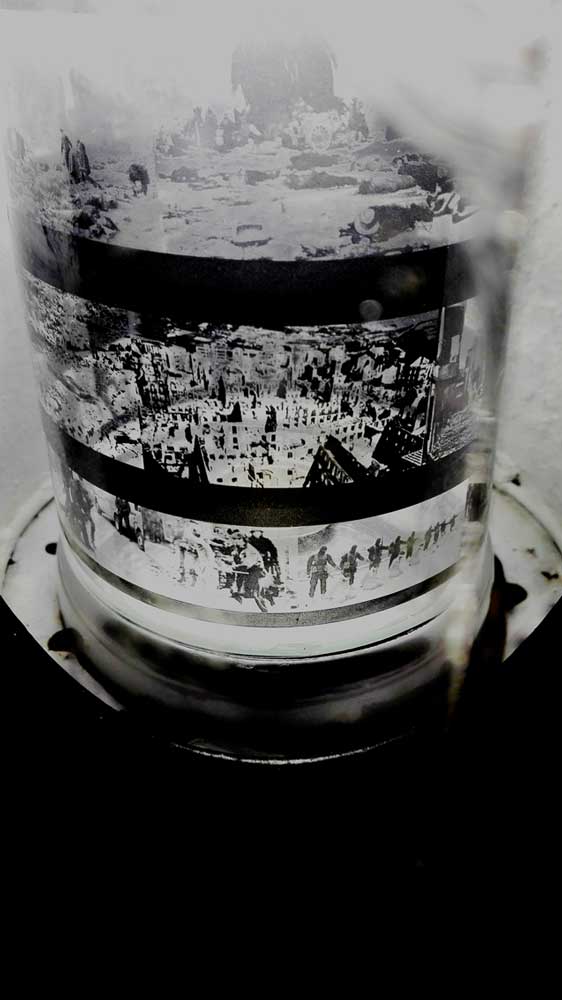
Each bottle contains the essence of each person, transforming into their image. Its s shapes are curved and rigid, but at the same time fragile; Like the human body, carriers of dreams and hopes. The bottle forms, the void and as they are transparent, it allows you to think about each thought created by each participant in this installation. In this way, the bottle become a transporter of dreams, illusions, desires, criticisms, praises or of emptiness itself and thus shows the interior of each person, their personality and creativity. Takes them out of the usual context, mixes them to create new objects. Forms that become flat. They separate, they come together. They hypnotize. They are part of the urban landscape, of everyday life, of everyday life. But they are redefined.

The individual, being social by nature with a desire to search, move forwards or backwards in the process of life and death, leaving a mark, creating connections with other people and generating new paths. That is why, grouping 10,000 bottles in curved and organic lines, such as glassy rivers, the natural labyrinth is formed: the fingerprint; the heart of the fingers, destined to feel, perceive and feel.

The labyrinth,

A complex structure with more than 5000 years of history, symbolizing life, death and rebirth. It represents the tortuous and error-filled path that must be travelled in order to find the centre of one’s self and wisdom. Seneca said, “To those who run in a maze, their own speed confuses them” and it is during life when we choose right and wrong paths when trying to reach our objectives. Life is like a spiral, as a natural labyrinth, a footprint”.

The footprint

It is the mark we leave with our presence, our way of being,  the ways we do things. And it is an elongated process over time; a willingness to travel the path that marks the route, as well as the thread that Theseus used to find the Minotaur and leave the labyrinth in Greek mythology. But … in the case at hand … have we reached the centre?

Red thread

Marks the driving force that drives us  forward, the sensory, the willingness to do so. Therefore, the thread runs through part of the maze, even without reaching the end, always hoping to reach its destination: desires.

Time, a path, a footprint and reflection. Francis of Doctor Desire sang, “Dream and desire, dare to transform” What is this but the basis for art, creation and feeling? Maybe it’s an ode to the urban, maybe a shout “Hau dena aldatu nahi nuke!” or a chasm between that and the what now? Meanwhile, what I really like is living it. Walker, there is no path, the path is made by walking.

Manzanas3

ORIGINAL SIN

Six hundred plastic apples, of unmatched beauty, brilliance and color, form a perfect circle under a dome, a geodesic dome. Geodesic domes are closely related to sacred geometry, based on one of the Platonic solids – the icosahedron. In its constitution there are pentagons -associated with the pentacle- and hexagons -associated with the Star of David, union between Heaven and Earth. The sphere confined in the geodesic dome represents mother’s belly, the womb.

The dome houses 600 plastic apples inside, which symbolize stereotypes, the symbol of sin used by the Church in the Bible, in Adam and Eve. The apple: poisoned fruit linked to women; as in Snow White and the 7 dwarfs. The artificiality of the fruit we consume, treated and waxed to delay its maturation and give it the shine and color desired by the consumer, but which, nevertheless, are tasteless and artificial.

Suspended on the circle formed by the apples, and hung in suspension inside the sacred geodesic structure, an apple bonsai. A living being, but mutilated. So that it has the desired aesthetic shape and the perfect size to have in your home. Bonsai represents the mutilation suffered and has suffered by women in almost all parts of the world: giraffe women, the size of female feet in Japan, the ablation in Africa, the carvings in the western world, etc.

A work that invites to reflection on sacred forms. On the practices that have been and are being exercised on women, on how their rights are violated (human rights), how they condemn their freedom. This is the case in many cultures, always under the influence of patriarchal religions. Patriarchal societies that have led their absolute domination to also impose stereotypes of feminine beauty throughout history.

“Original Sin” invites us to reflect on the superficiality, on what is sold, on the stereotypes of feminine beauty in the world – extrapolated, for example, to food in the western world. The duality between the natural and the artificial, about the perfection and imperfection, about the sacred or the profane.

Manzanas2
Manzanas1
Libros1

ANONYMOUS HEROINES

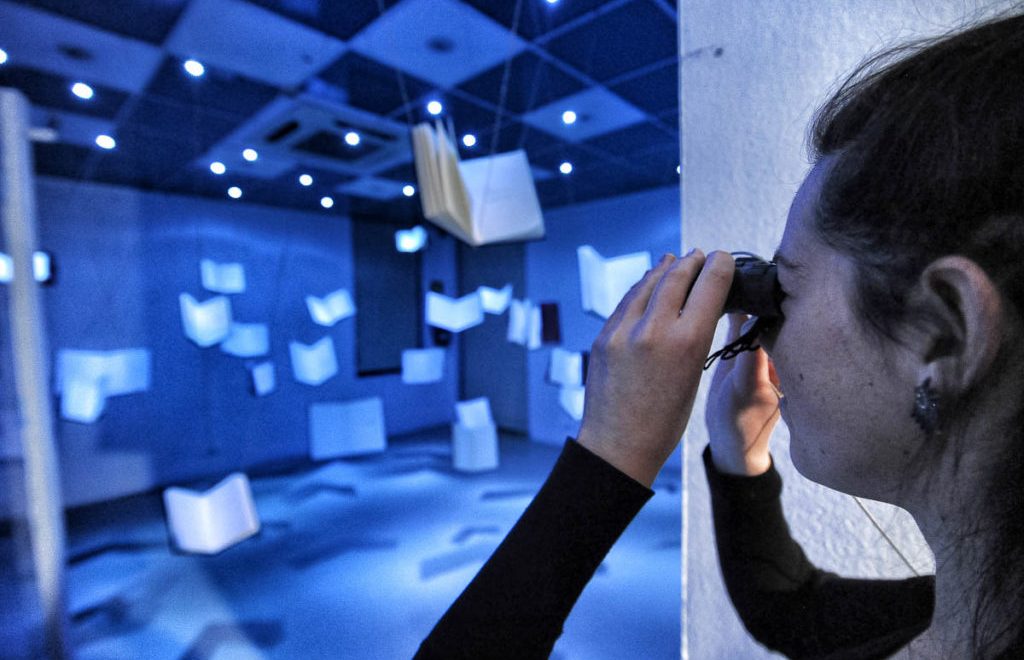
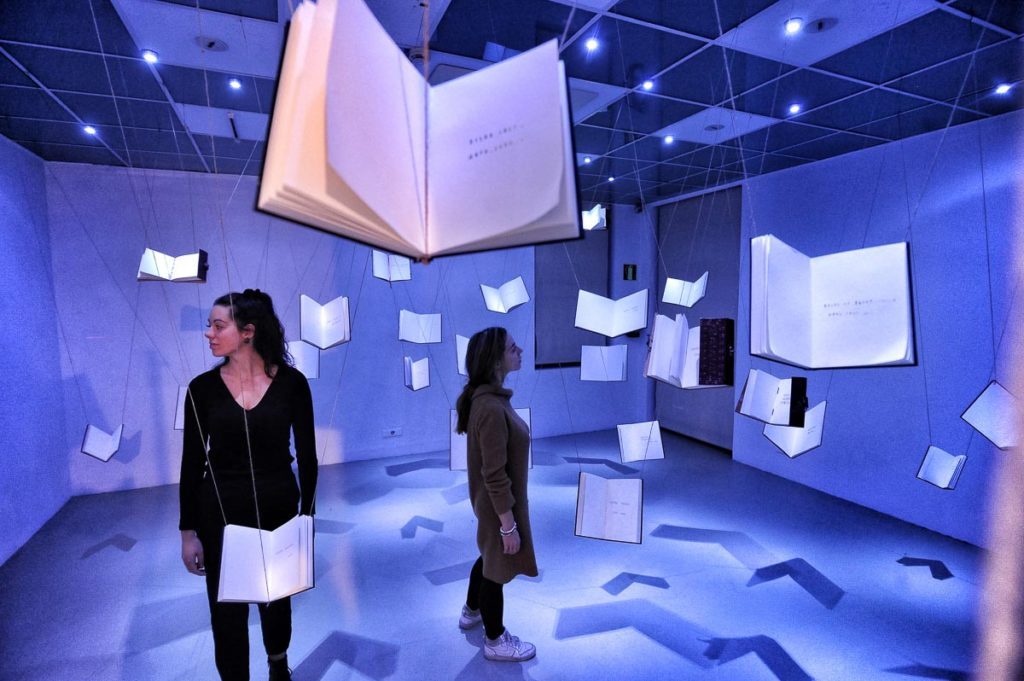
A sequence of 30 open books, suspended in a reduced square space, which shadows remember to the flight of birds. They reveal 30 names of women who have been pioneers, creators of new perspectives, throughout history. Own names such as Simon de Beauvoir, Camille Claudel, Marie Lavoisier, Clara Campoamor, Pantita Ramabai  or Hypatia de Alejandria, among others. Names that have been hidden from us; igonored, invisibilized and silenced by men who have even attributed those women’s accomplishments.

A Wall of methacrylate prevents cultural users from getting closed to the books. Reading these books is conscientiously complicated:it must be donde from one of the room corners, where some binoculars are available to uso and which ones is posible to read the names of these heroines. They are written at very small size, barely noticeable in their pages.

The difficulty of finding female references throughout history, the difficulty of finding them in the books and the difficulty of women to access to high office, to be valued and treated in peer-to-peer relationships, are the leit motiv of this artistic installation, Anonymous heroines.

The glass ceiling with which women still find nowadays, is understood in this installation by the artista as a symbolic barrier that has paralyzed, limited and reduced women to a minimun, to a second and unimportant place. These limitations, borders imposed on women, are represented through the impossibility of access to the room.

The artwork looks for the interaction of the public, who will trey to figure out the names of these women. Ignored for years their names appear in the books that make up this dreamlike work.


Libros3
Libros2

Artistic Residencies

Irantzu Lekue participates in three artistic residencies in 2017

Irantzu Lekue participates in three artistic residencies in 2017

Bordeaux, Madrid and Baigorri have been the stages of these residences in which the Basque artist has produced different works

Three are, for the moment, the artistic residences in which Irantzu Lekue has participated so far this year in cities such as Bordeaux (France), Saint Etienne de Baigorri and Madrid. Stays with different objectives and functions have allowed it to create new works and make new contacts with artists and to deepen the current reality of cultural management within the European framework.

The artistic stay in Baigorri has allowed him to generate new work. The project began “with the contact with its people and their environment”. Thus during several days he developed landscape and figurative works of the surroundings of Castle Etxauzia. The oldest elements of this castle date back to the 11th century. It was seized by the Nazis in World War II, lodged Charles Chaplin and was owned, among others, by actress Eleanor Boardman
Closely linked to various events in Navarre history, Irantzu Lekue has made the Arnasa 01 series there, “repairing the surroundings, the views of Etxauzia or the village from the vineyards that surround it,” explains Lekue. “A suitable frame to create” from the series Arnasa 01 where the works are created in mixed pictorial technique through a dynamic brushstroke, “similar to the impressionist, representing the transience of light in the instant to be captured in situ “. The work consists of six large format paintings that have as their center the Castle Etxauzia. The Castle is located on a rocky promontory of Baigorri – 36 kilometers from Bayonne -, has passed much of the history of Lower Navarre of the last ten centuries.

The artistic residence in Bordeaux (France) has been developed within the framework of the third edition of the Creative Mobility Program of the Euroregion Vers an Ecosystème Créatif Transfrontalier and is more linked to cultural management. An artistic residence within the program developed by different entities of the Eurorphion: the Basque Government, through the Agency Garapen, Bitamine Faktoria and Fabrique Pola, the Bordeaux artistic and creative pole, referring to European level, which next year will inaugurate its New headquarters: a building of 4,000 square meters on the banks of the River Garonne.

Vers an Ecosystème Créatif Transfrontalier is a mobility program between 24 young creators from Euskadi and Aquitaine, which contributes to the consolidation of a creative ecosystem in the Euroregion, “to bring Euskadi and Aquitaine closer together, so that we get to know each other and start to create new Projects together, “explains Irantzu Lekue, artist and founder of ARTgia sorgune & aretoa. Thus the program is developed in order to be able to give the maximum attention to the creators and to share with them / them meeting spaces that allow to weave networks, to connect ideas, to look for synergies between the local creative ecosystems-comarcales- Regional partnerships with the aim of moving towards the consolidation of an Euroregional creative space.

They have established contacts with “creative entrepreneurship spaces, galleries and creative factories such as La Reserve, 5unset, Bon pour1 tour, Galerie La Mauvaise Réputation, Borderline or the meetings held with the management of Fabrique Pola that provide tools for the improvement of The projects, refresh creativity and innovation and encourage inspiration and new ideas, both in Aquitaine and Euskadi.

The micro artistic residence of Madrid has developed in the Plaza del Sol. A different bet that was born with the aim of turning the street into a cultural epicenter turning it into a “space of artists in creation”. There were several artistic and collective proposals that participated in the residence.

Under the direction of Guerrilla Food Sound System that returned to Madrid after its passage through Matadero, La Casa Encendida or MediaLab Prado the artistic platform returned to the capital with an innovative proposal that has as an aim to extend this spirit of hybridization and experimentation in new formats To more initiatives and agents, “said its promoter Ruben Castillejo.

This time, the axes of action were, collaborative and committed creation as a tool of social action, and the use of public space as a place for the creation and dissemination of experimental artistic and cultural practices

In the “Akamparte” initiative, artists such as Alexander Ríos (Bogotá, 1984), Daniel López de Pariza (Vitoria – Gasteiz, 1985), JMYES (Madrid, 1991), Arturo ‘s multidisciplinary artist and researcher in contemporary art participated with Irantzu Lekue Cancio, the group from Bilbao, Truca Recel.

IndiaSensations

IndiaSensations

INSTALLATION, PHOTOGRAPHY, PAINTING, SCULPTURE, ACCESSIBLE ART


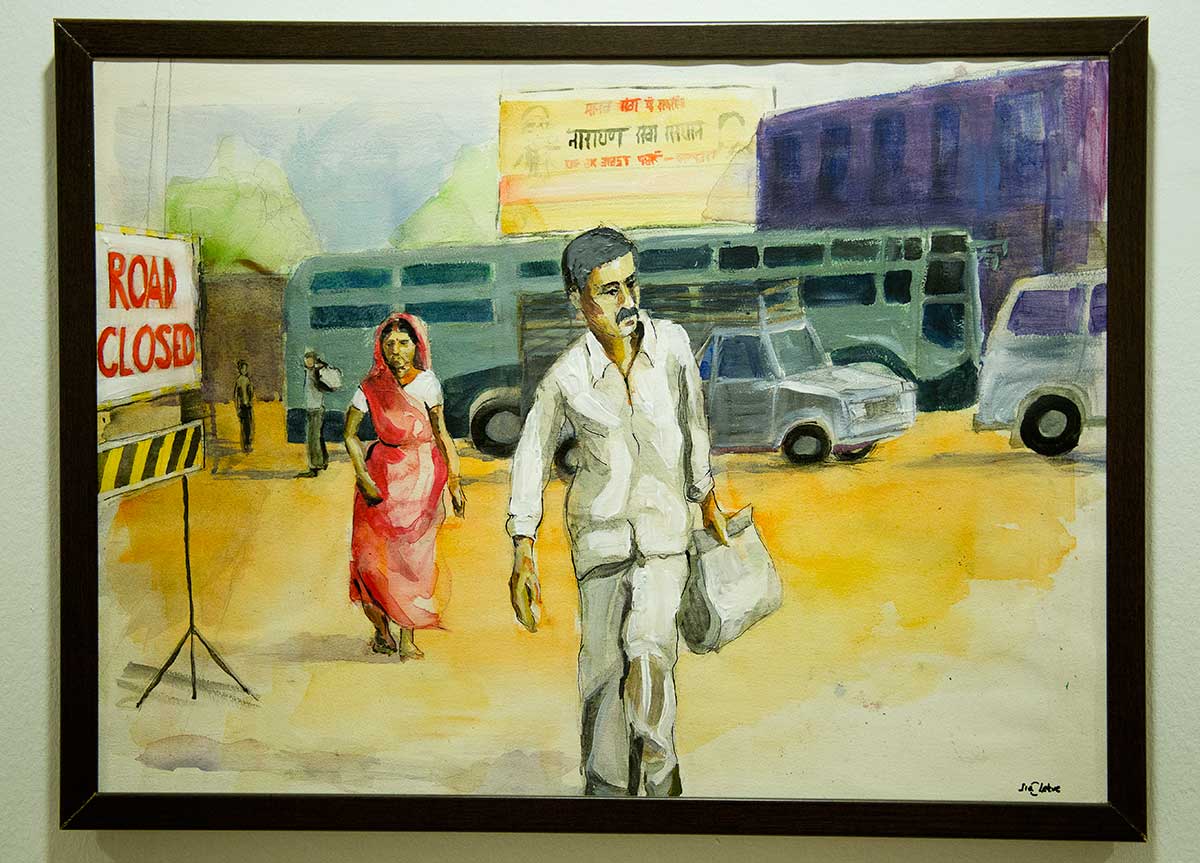
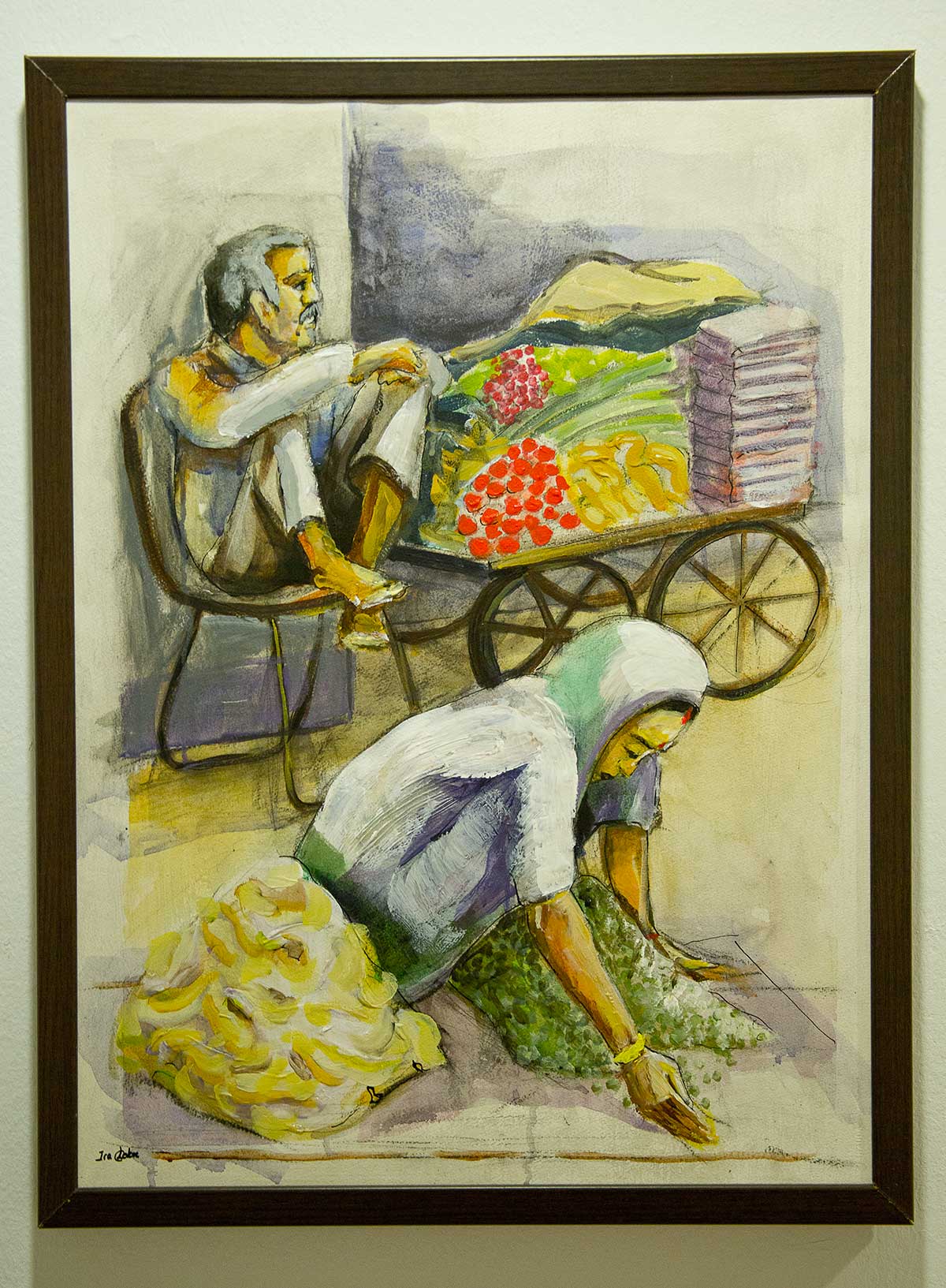
IndiaSensations collects the sensations and feelings experienced on a trip to India.

With this exhibition , she wanted to invite the viewer to notice their senses. A smell, see , hear and touch to feel the nuances of each work.

During the past year, she has worked with projects aimed at art accessible. Therefore, she wanted to continue in the same line and that this exposure exceeds the barriers of people with special needs , relying on the inclusive art.

Combining sculptures , paintings , sound , smell and installative matérico- ( for the viewer is immersed in a wide range of sensations experienced in India) , analyzes the status of women in this country and the caste system . For which she has created 12 accessible works that challenge some elements of our own culture.

Social injustices of both continents are active by selfishness and manipulation of the wealthy , socially, politically or economically . On the other hand , the situation of women in India is bleak . The subjugation of women in this country is spoiled by tradition , reducing them to serve their families or husbands. A confines patriarchy at home housework and child rearing . This has made him question the Western culture where patriarchy still existing in society also . Hence the abuses against women and in many cases the submission and continuous observation of women as sexual merchandise or pure discrimination based on , among many other examples wages.

From their perspective of Western women , she wanted to question the role of women in society and how, through old ” and outdated ” ways women live in different continents ” submissively , not considered equal .” He has also noticed the caste system, ” a social organization based on membership in a social group from birth to death, in which the person takes , accepts , swallow what has been assigned and used to everything that follows equally unfair. So that nothing changes .

She wanted to promote inclusive art, because for her , art is like a gem, a precious diamond to be polished a lot and that each person perceives in a unique way , personal , and not transferable . ” That is the reason that led her to break her own mental barriers and allow the public to touch the works ” end this exclusivist vision of art , with the aura of untouchable. He wanted to make this project a sense , a reflection that will inevitably personnel.
She takes over a year experimenting on how to design their works to be accessible to a phase would begin in India. Create not only watching, but considering that the works are palpated , heard or smelled . That the essence of the senses is translated into the artistic work, that thus everyone arrives.

Western culture and Indian converge well in a mixture of contrasts , traditions and sensory differences that invite the viewer to live a critical and sensory experience.

PREDESTINED ROAD

The floor , filled with sand , marks a unique way to go in the room. This way , the viewer variable , in order to create new paths , new paths outside the established , will take us through the surface to a ranguli ; traditionally a drawing designed by Hindu women . The work aims to call the interaction of the viewer by changing the marking, predetermined path for all Hindus from birth ; especially women.

Sala II IndiaSensations

RANGOLI

Traditional Indian painting created by women at the entrances of their homes to fill the spaces of prosperity. It takes place in the “Diwali ” ; the festival of lights. The work aims on the one hand, referring to the rituals and beliefs of India, on the other, give importance to the creative work of the Indian woman.

Ranguli IndiaSensations

ONE THOUGHT

This tree has no branches, it does not grow up, but down. It has branches formed by lead funnels inward, canceling the evolution. Each branch is a funnel, through which we all must bear if we want to be part of this society. It is an allegory of the single thought, annulment of the different, the imposition of structural values ​​that impede the development of the person.

Dimensions: 36 x 36 x 36 cm.

Mixed technique

pensamiento-único. IndiaSensations

CLASS INTERESTS

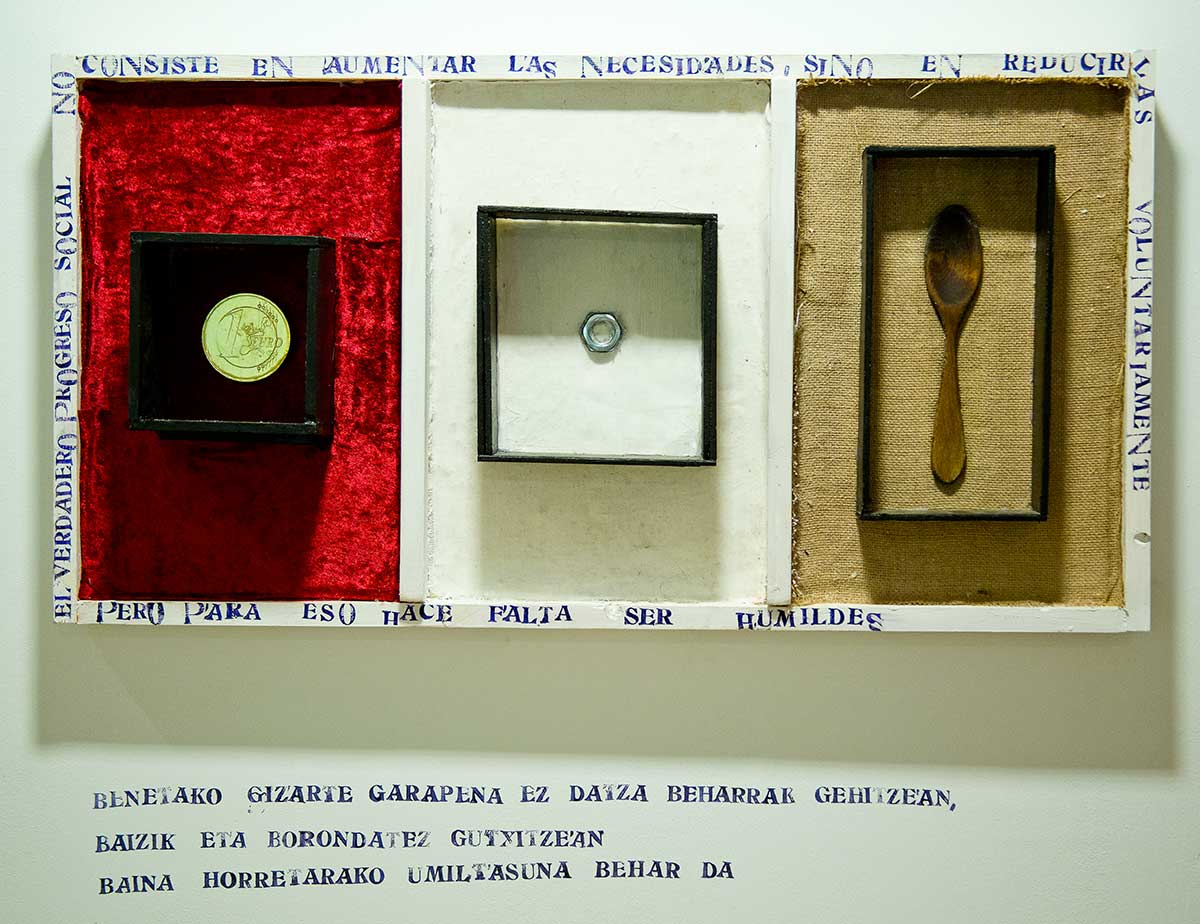
This touch piece invites the viewer to feel the interests of different social classes. Make critical and mentions that if we open our senses, we arrive at social understanding ; if we break social barriers and we combine these interests, we reach the end of the war.

This piece refers to another phrase from Ghandi:”The real social progress is not to increase the requirements, but reduce them voluntarily ; but this requires humility. ”

Dimensions: 84 x 45 x 5’5 cm.

Mixed technique

diferencias-de-clase. IndiaSensations

HUNGRY

Although the hunger index has improved this year in India, much of the percentage of the population still live in extreme poverty, having not even enough to eat . This piece makes hunger clear.

Although India is customary to eat with your hands, the spoon has always represented the working class, and a spoon facing up, empty, represents hunger, lack of food. A row of spoons to eat concave instruments, ask the viewer food throughout the room.

Hambre II. IndiaSensations
Hanbre. IndiaSensations
Hambre I. IndiaSensations

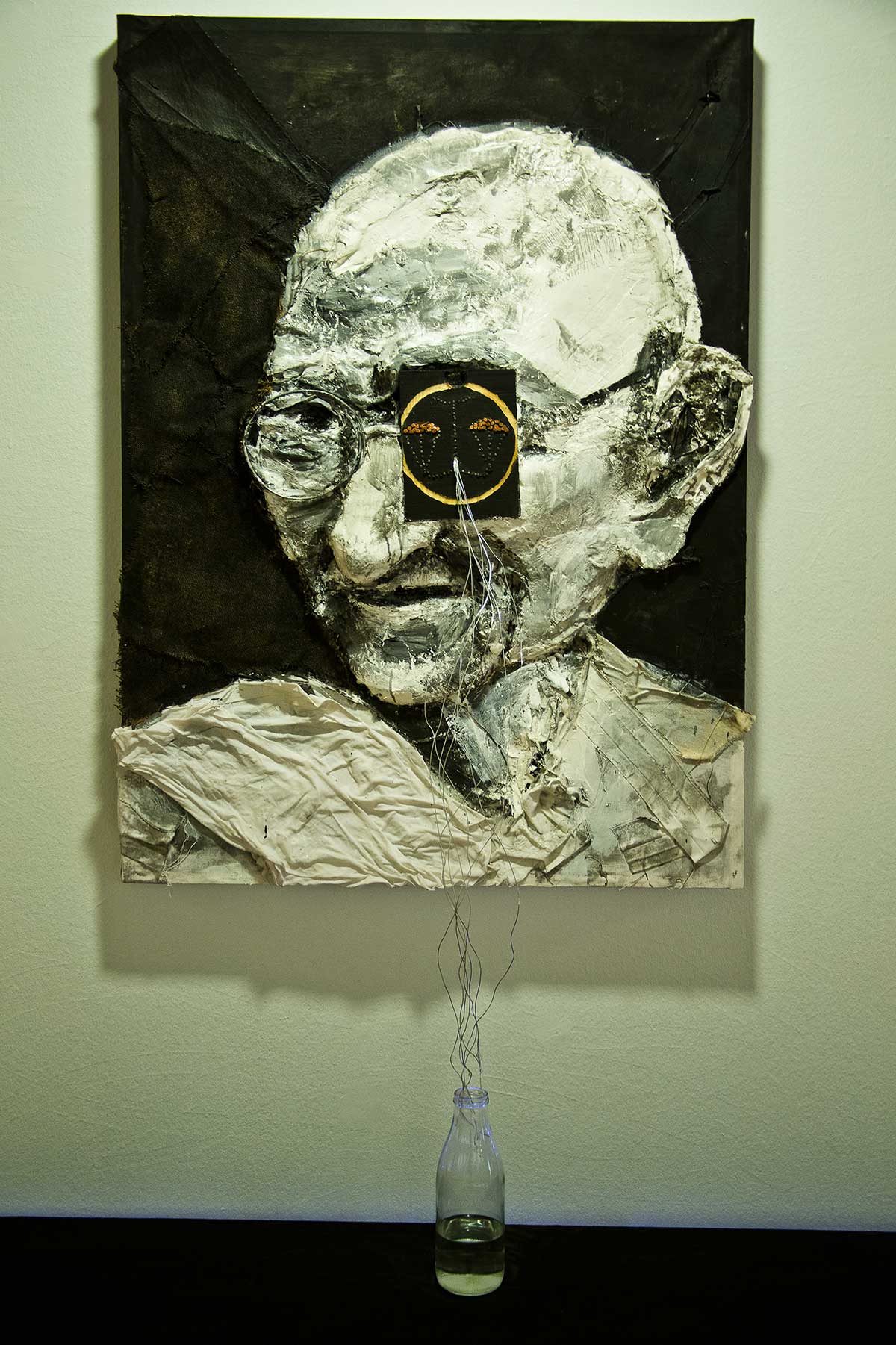
GHANDI cries for INJUSTICE

This pictorial sculptural work represents Mahatma Gandhi, whose tearful eye is covered by injustice. Cries at the injustice of classes, the misuse of capital, and social dismemberment implied by this social situation. Mourns the lack of humility and humanity.

Dimensions: 115 x 82.5 cm

Mixed technique

Ghandi-llora-por-injusticia. IndiaSensations

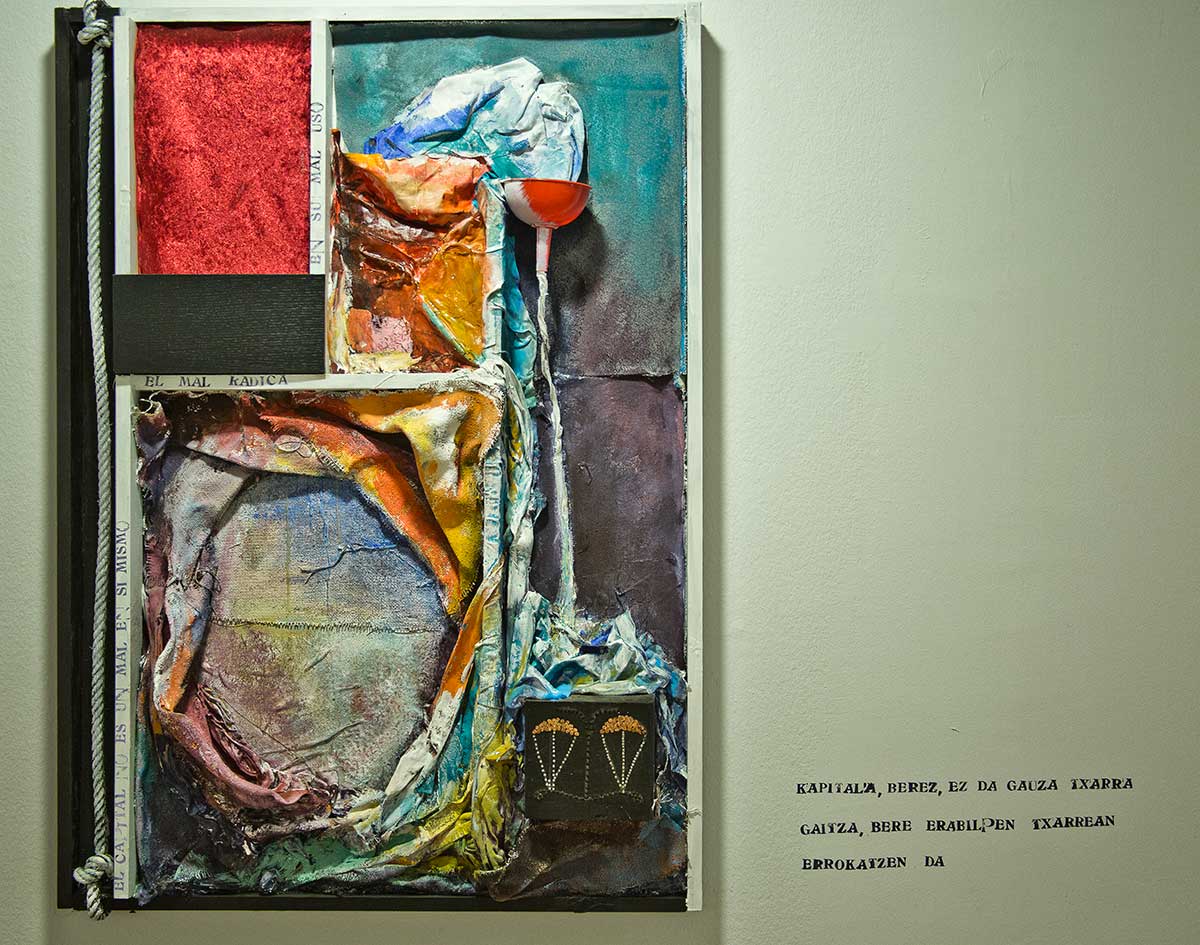
VORTEX OF INJUSTICE

Matérico pictorical work in which the various social classes through different touch fabrics are represented. The current economic crisis affects mainly the lower middle class, which is deflated, filtering and creating a whirlwind of injustice. The rope is tight, and while the class is hidden behind a barrier. Injustice reigns in our society.
The text illustrates this sentence of Mahatma Gandhi:”Capital is not an evil in itself, evil lies in its misuse. ”

Dimensions: 116 x 82.5 x 7 cm.

Mixed technique

vortice-de-injusticia. IndiaSensations

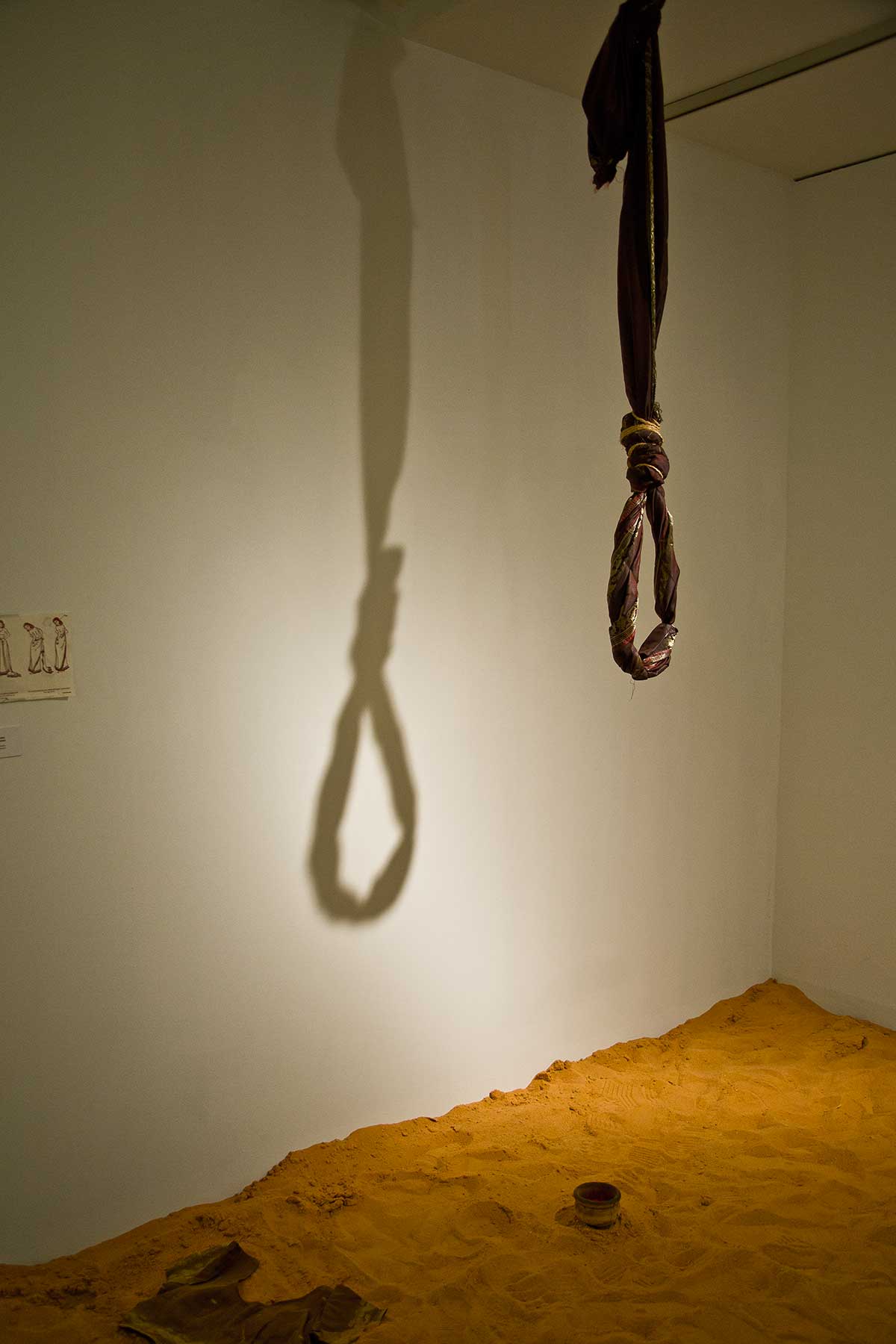
CONVICTION

The typical dress of women in India is the sari. This embroidered or printed with different motifs, fabric is more than 5 meters long and is used to wrap Indian women. Under this practice, the condition that supports women in this country is located. With my return from India I brought with me a sari, which will become part of the installation by way of a gallows. To this it will accompany a bowl of red pigment to paint the siindor, a mark on the forehead of married women.

This work refers to the killing or girls abandonode carried out in India by inability of their parents from paying the dowry. In addition, women in this country will always belong to someone. Since her birth, her parents and her future husbands marry according to (almost always arranged marriages and negotiated by their parents), become dependent on their husbands. It treats women like property and that is their conviction. Therefore, the sari hanging represents the condemnation of women.

Condena. IndiaSensations

WOMEN IN INDIA

The life of women in India. Their status and submission.

La-mujer-en-India-I. IndiaSensations
La mujer en la India III. IndiaSensations
La-mujer-en-India-IV. IndiaSensations
La-mujer-en-India-II. IndiaSensations
La mujer en la India V. IndiaSensations
La mujer en la India VI IndiaSensations

WOUND

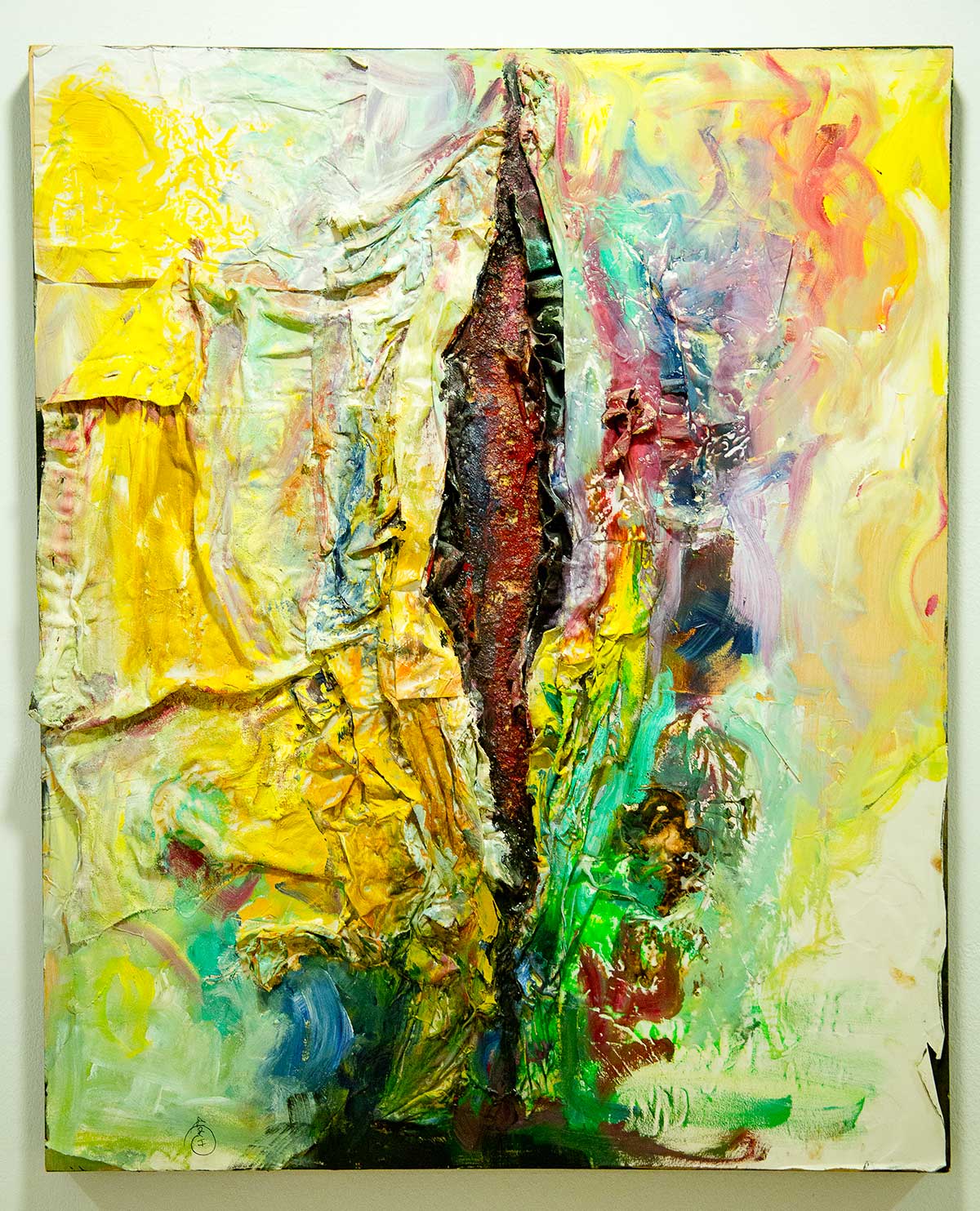
This pictorial-material work, part of the triptych “Healing Process” represents an open wound. Thus, it refers to the suffering that women in India and elsewhere in the world live. It means an injustice, as an open lesion that has to be sutured. It is a critique of the situation that many woman live, simply by virtue of being woman.

Zauria. IndiaSensations

SUBMISSION

A menacing whip camel on a Hindu broom. Each object corresponding to a genre. It is a metaphor for the abuse and the submission of women.

Sumisión. IndiaSensations

ELITE AND CHAOS

This work analyzes the isolation that cause hotels or spaces reserved for the elite, from the outside where poverty and chaos resides.

This feeling is very powerful, and which, when introduced in these luxurious spaces, like you’re in another place, another time; they disconnect from reality outside.
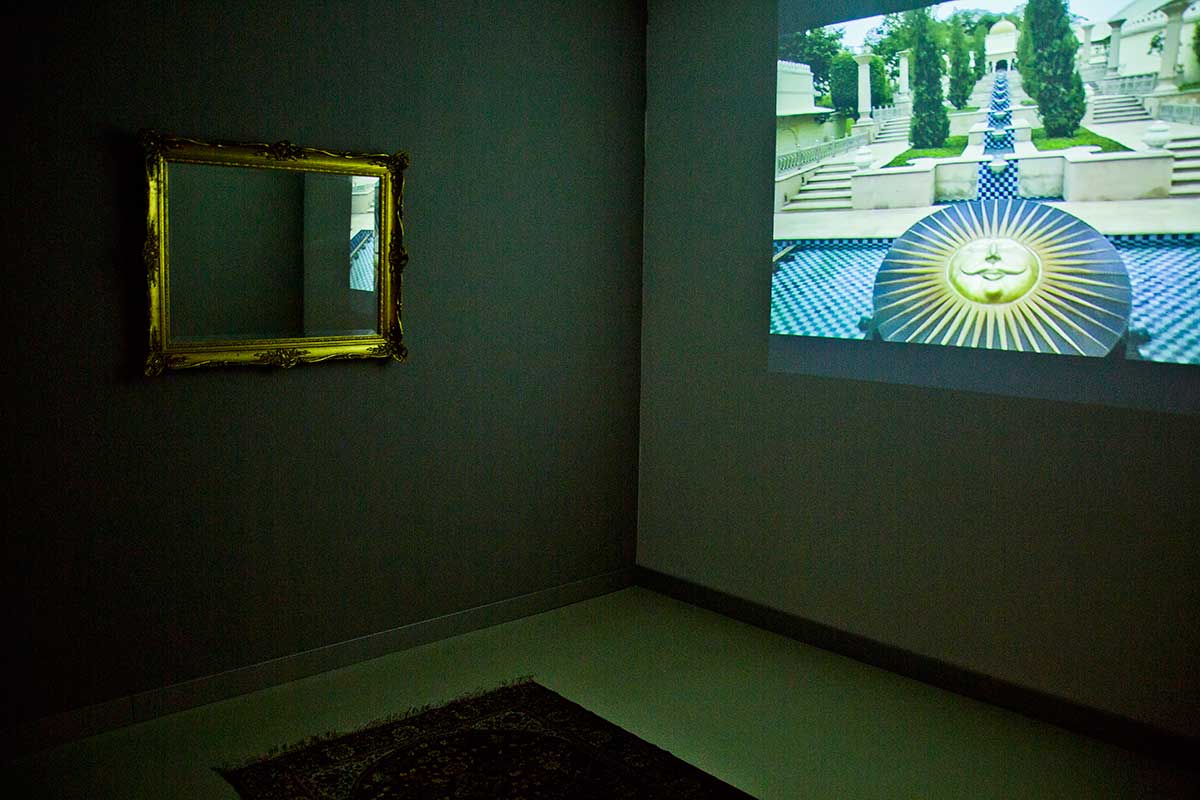
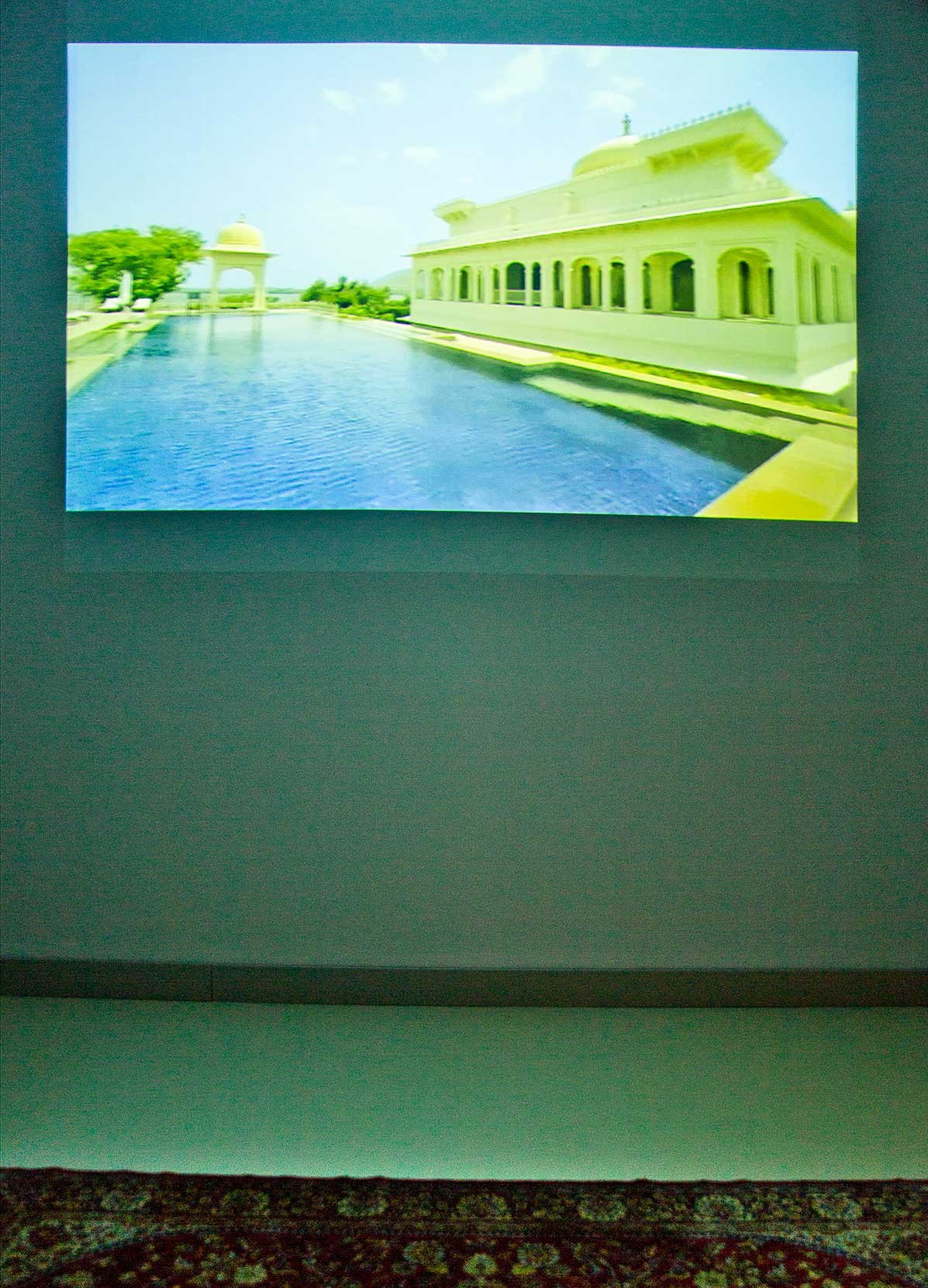
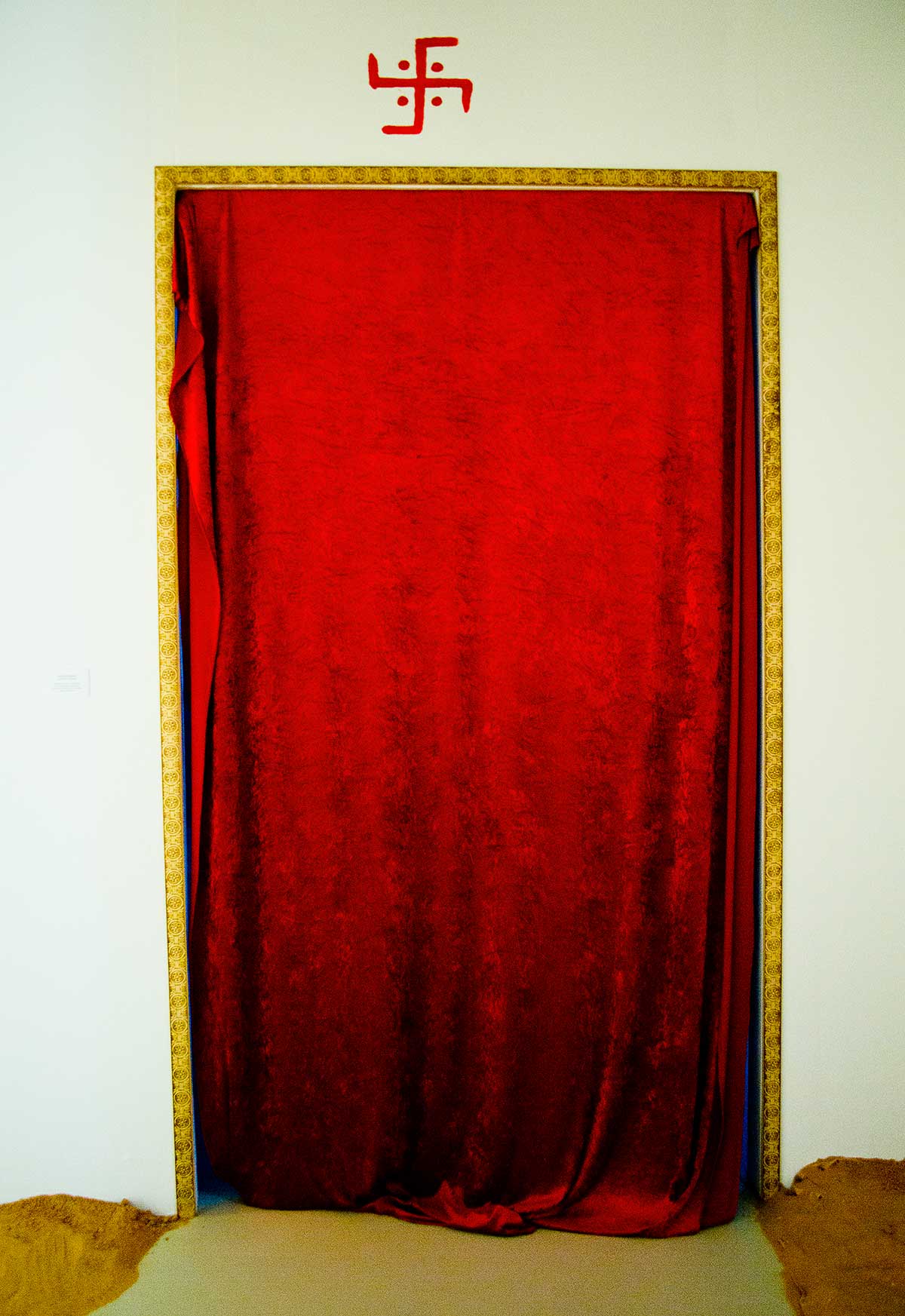
This feeling is reflected in the work by an isolated cabin in the exhibition hall. Within it, a wealthy area, full of luxury, objects of great value, as pashminas, mirrors, a chair covered in velvet, and an audiovisual propaganda videos projected luxury hotels in India, accompanied by relaxing music and folk.

Outside, however, many shows images of poverty, stress caused by traffic, the crowded markets of people, unsafe. The streets are full of life and death, everything is in sight and nothing is hidden.

The sandy soil and sound atmosphere is stressful, a mixture of beeps cars, a traditional melody sung by a Hindu girl who begs, traditional music, songs of worship and snake charmers, cows, trains; chaos. A mixture that causes stress and surprise the viewer and which, when introduced into the passenger compartment elite varies its entire sensation, experiencing the contrast.

Lujo I. IndiaSensations
Lujo III. IndiaSensations
Lujo II. IndiaSensations
KaosI. IndiaSensations

The swastika preceding luxury room is a recurring in Hindu, Buddhist and Jain culture symbol.

In Buddhism, due to the use of this symbol by the Nazis, it is used in anti-clockwise position against the direction of clockwise and symbolizes all eternity or the 4 elements: fire, earth, water and air.

In Hinduism, the swastika is found everywhere in the temples of the Hindu religion and symbols, altars, scenes and iconography
India and Nepal, both in the past as today. In Hinduism, the two symbols represent the two forms of Brahman (the impersonal concept of God). In effect clockwise represents the evolution of the universe (pravritti), represented by the creator god Brahma while counterclockwise represents the involution of the universe (nivritti), represented by the destroyer god Shiva. You can also see how pointing to the four cardinal points, symbolizing stability. Its use as a solar symbol can be seen in the representation of Suria, the sun god for Hindus. It comes being used as a sign of good luck. It is also seen as a symbol of power and are popular versions that resemble the swastika to the figure of a man. Until today it is used in the iantras and Hindu religious motifs. It can be seen on the walls of temples throughout the Indian subcontinent. It can also be found in the notes accompanying personal gifts and header cards. The swastika is a sacred symbol for auspicious among Hindus. It is typically used in decorating all kinds of related elements of Hindu culture. The god Ganesha is associated with the swastika symbol. Its use is widespread in India and Nepal.

Finally, Jainism why the swastika combined with a hand.

entrada-Lujo. IndiaSensations